


The NHS has a huge backlog of patient appointments and a requirement to reduce and remove unnecessary appointments in order to provide timely and effective care to patients. I worked with clinicians in NHS England and NHS Wales to design a digital solution that that would allow patients to request an appointment rather than automatically have a follow up appointment after treatment. Following interviews with various clinicians it became apparent that many follow up appointments were not needed and often patients that had fully recovered would not show for their follow up appointment. The clinicians wanted to give patients the option to easily request an appointment if they felt they needed it, but also allow clinicians the ability to review the appointment requests quickly and with enough information to be able approve or not.
NHS Wales had previously trialed a ‘paper based’ version of PIFU called SOS (Seen on Symptom). This involved giving patients a card with a dedicated phone number to call should they want to book a follow up appointment so I ran a service blueprint session with the clinicians and hospital staff that had been involved with the trial to capture information such as metrics, critical moments, an overview of what systems were needed to run the trial, and also questions around what had and hadn’t worked so well.
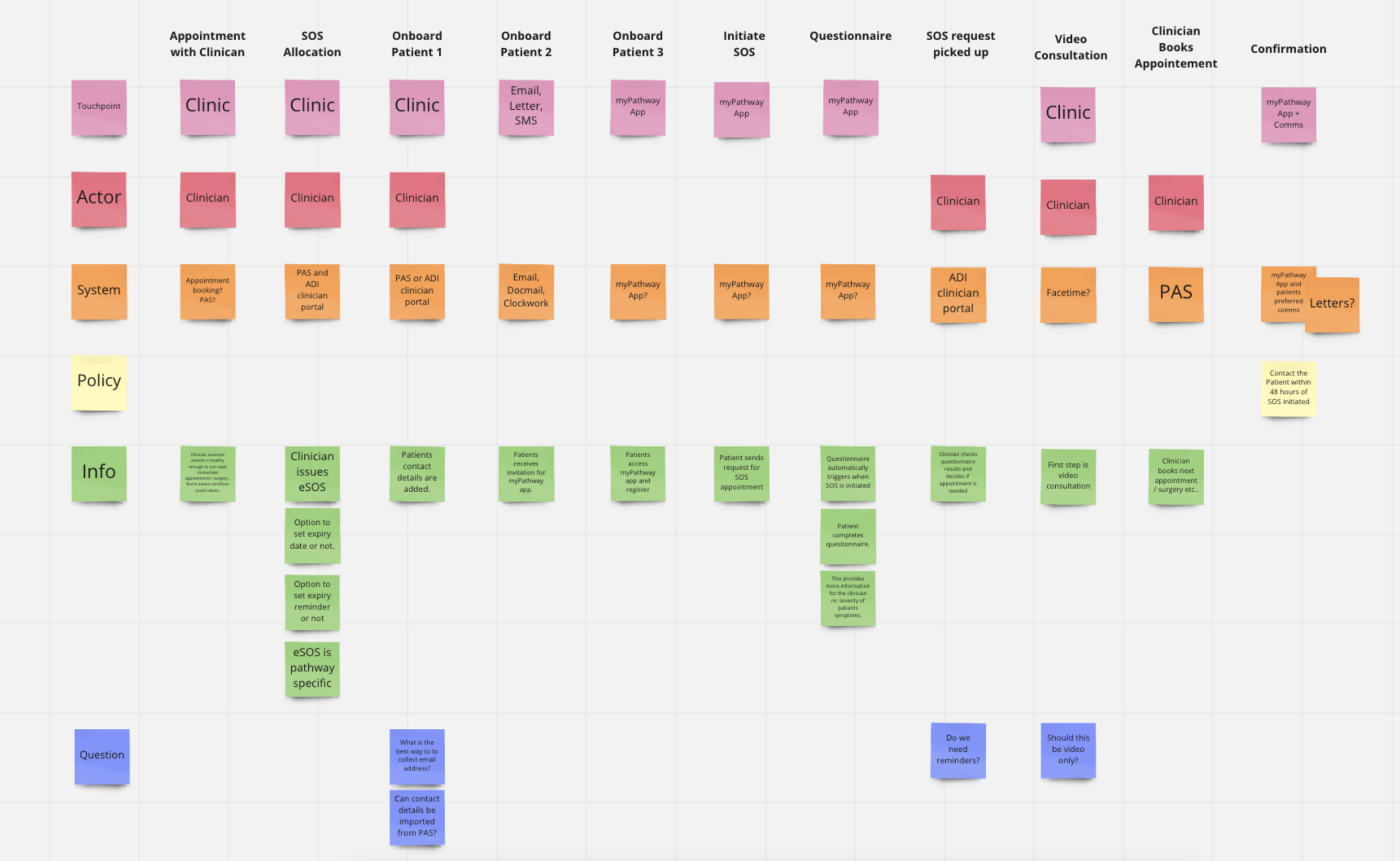
I then mapped out a ‘future version’ service blueprint of a digital PIFU service (that removed the problems that existed with the paper based version) and worked alongside the solutions architect to ensure that the user journey was feasible from a technical perspective.
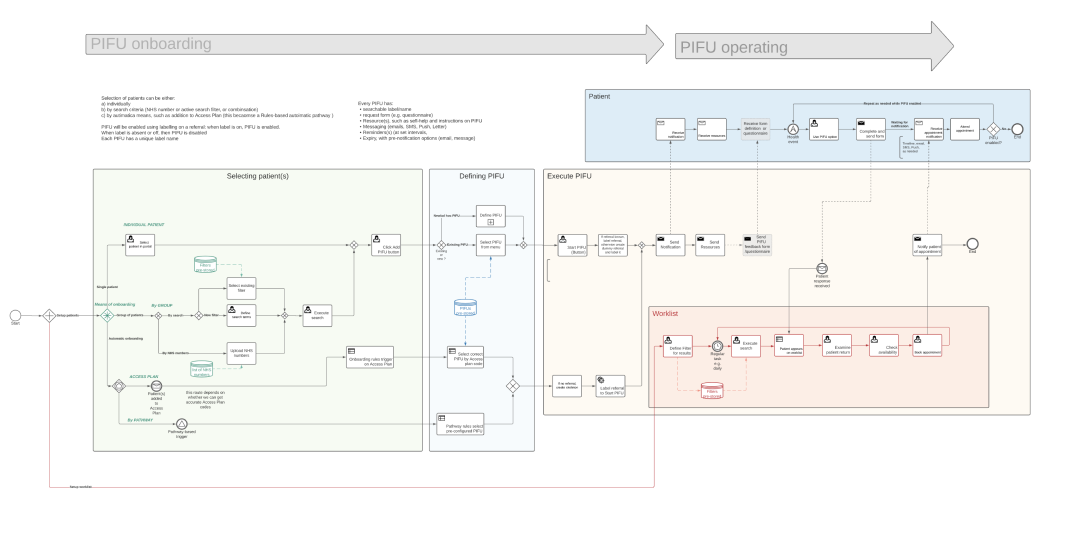
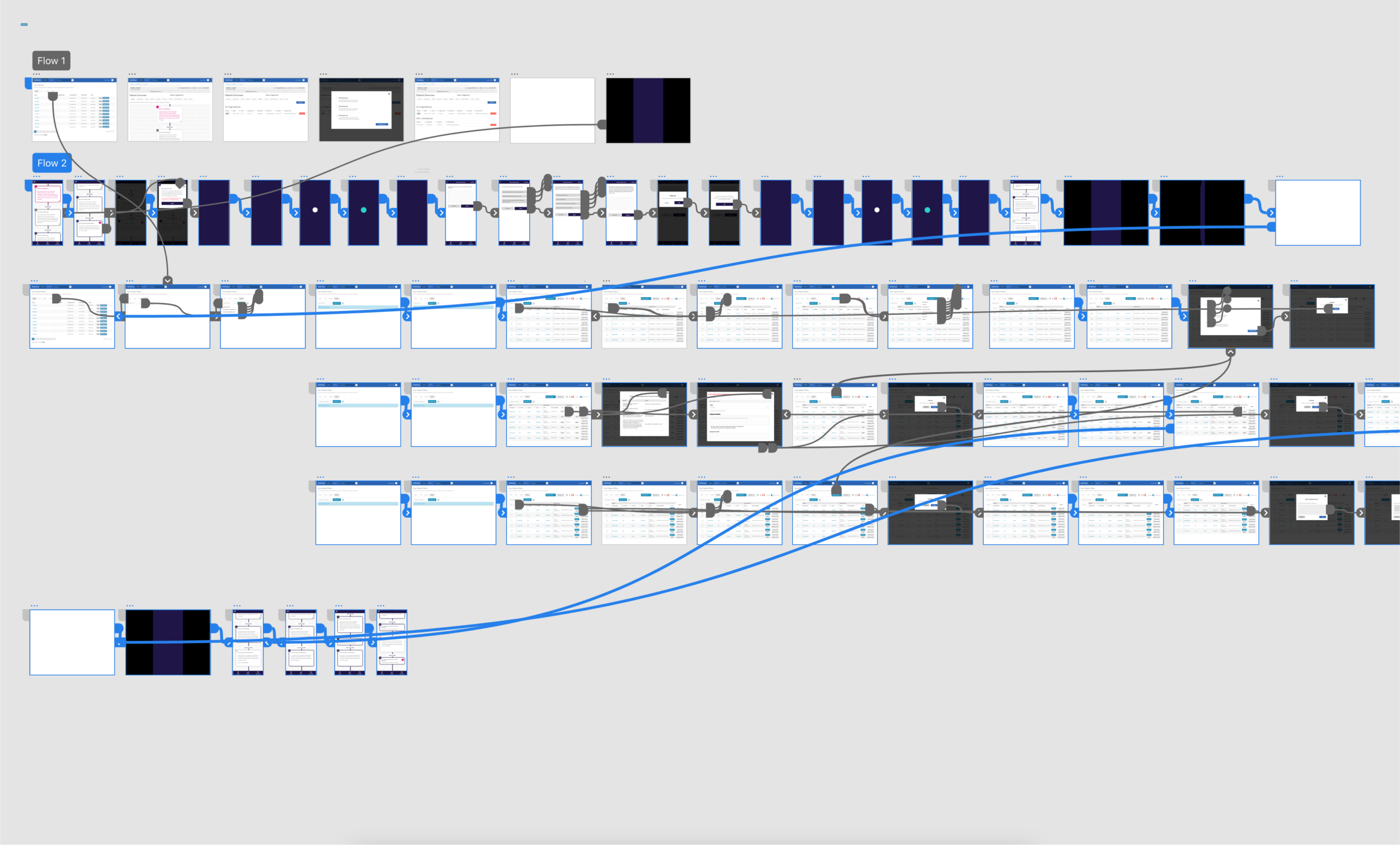
The next step was to create a prototype based on the proposed service blueprint. Taking into account the need to adhere to clinical safety guidelines and accessibility needs of the patients.
I then had user testing sessions with both patients and clinicians, this involved regular zoom calls with patients to get their feedback (which was very positive). They really loved the thought of being able to contact their clinicians easily and quickly without having to make an appointment by phone but also that they could get direct communication without needing an appointment or trying to get through on a phone call. The feedback sessions with clinicians was mostly positive, but there were concerns around some of the language used. As part of the wider roll out, the language needed to be generic enough for various hospital departments so I organised a full day content workshop session in person to agree on the final wording. We were also able to identify some areas where pre-defined copy could be added to responses to save the clinicians time and save them from having to write responses to every patient.
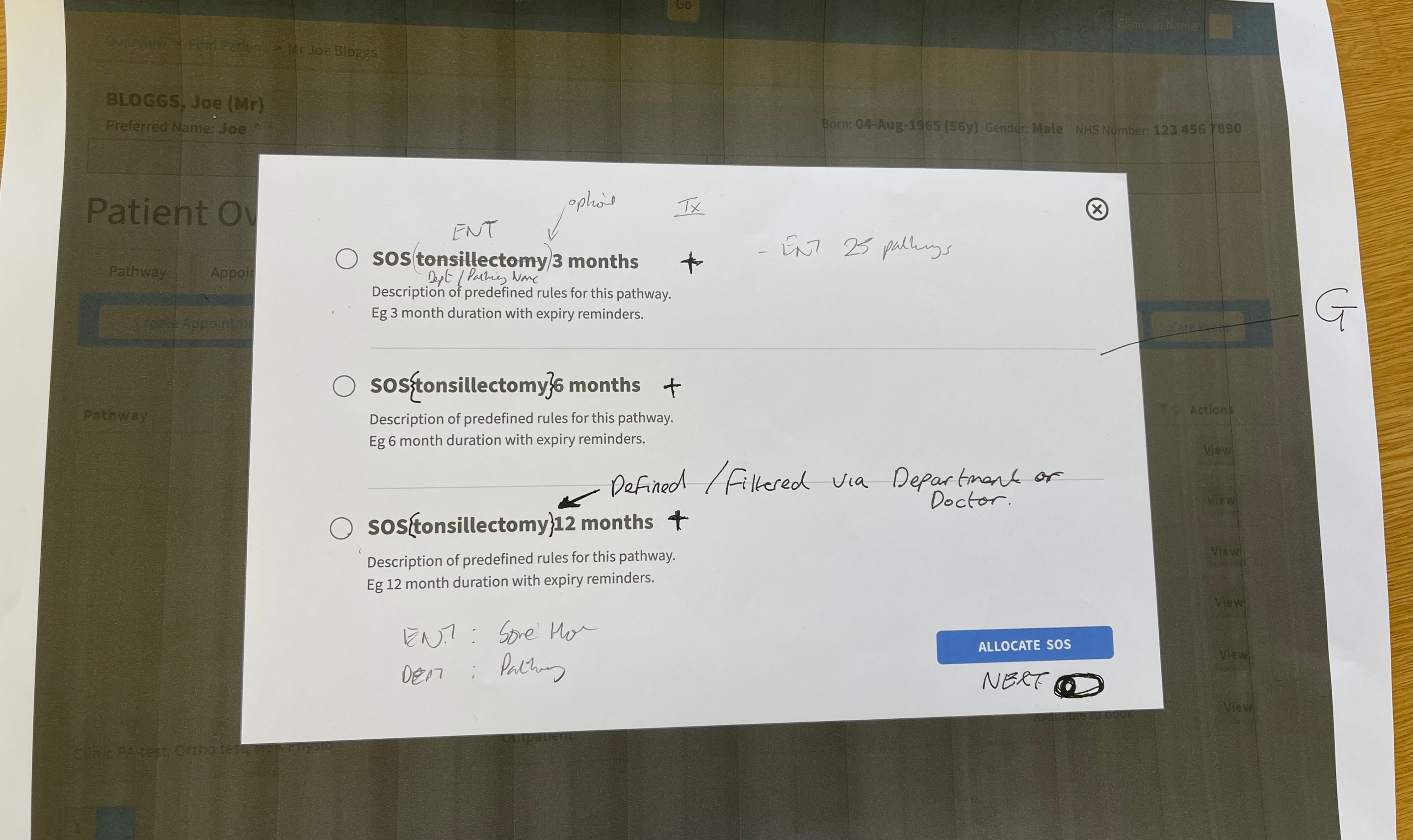
The PIFU solution (at time of writing) has completed a successful alpha trial within the NHS and is about to begin the beta trial in more departments with many more patients. On completion of a successful beta trial, then a full roll out has the potential to reduce NHS appointments by as much as 20% in the relevant hospital despertments.